I remember a phase in my life when I was drawn to dark, moody images. They felt artistic, intense, expressive. But something shifted when I became a mother.
When I started photographing my son, I found myself slowly moving toward light—toward something softer, calmer, and more honest.
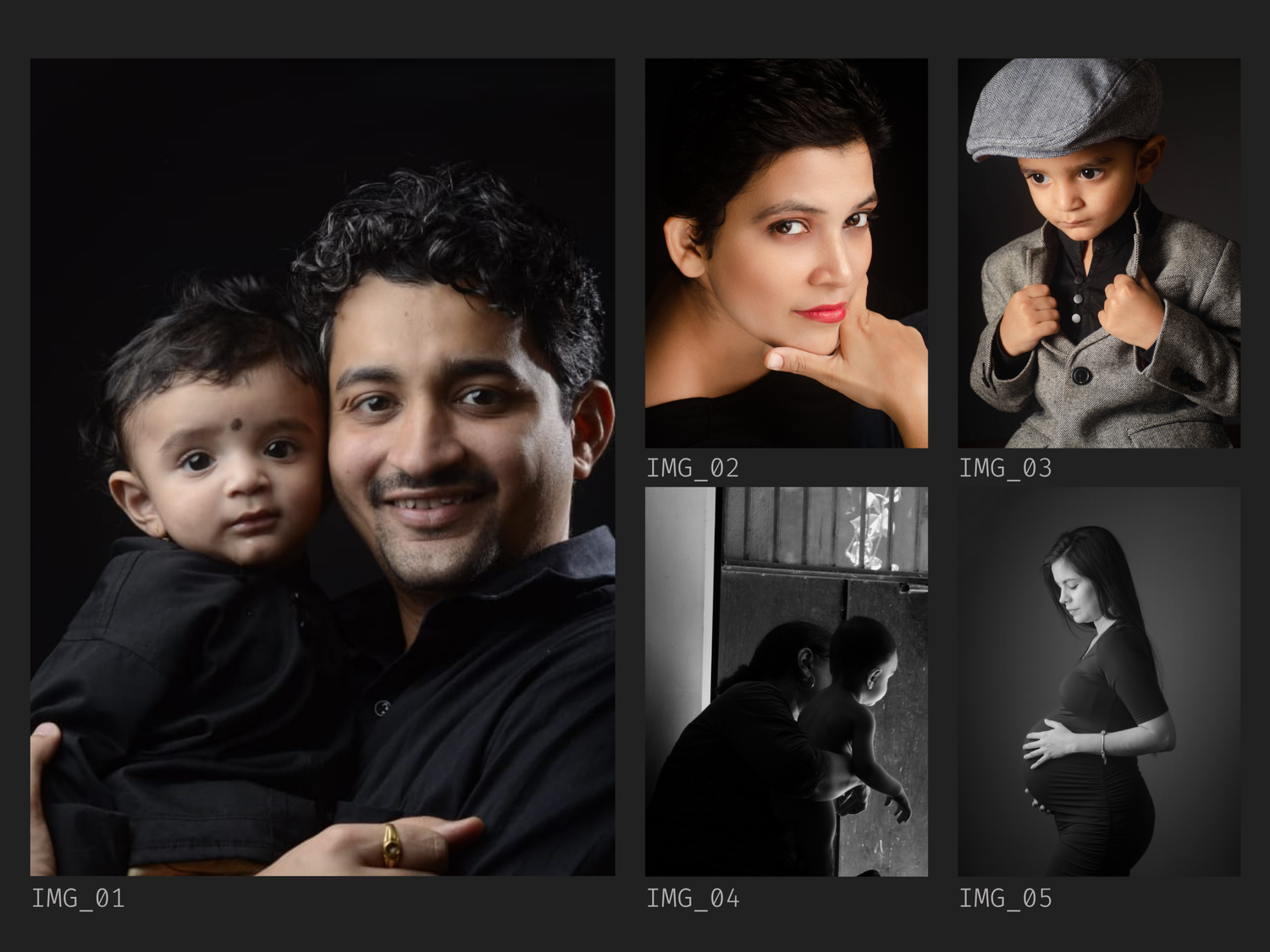
What once drew me to shadows now draws me to light—because motherhood taught me that the quiet, gentle moments are the ones that truly last.
That’s when I discovered what I now call white-on-white photography.
If you’re a mother searching for maternity photography in Waterloo, newborn photography in Kitchener, or family portraits in Cambridge, you may have come across this soft, glowing style and wondered what makes it feel so different.
At its simplest, it is exactly what it sounds like. You wear white or soft neutral tones, and you are photographed against a white background. Technically, it’s called high-key photography. But if I were to explain it as a mother, I would say it’s a way of removing everything that doesn’t matter so we can finally see what does.
There’s something deeply emotional about these images. Every time I look at a well-crafted white-on-white portrait, I feel a sense of peace. It’s quiet, almost like a pause in the middle of a busy day. When I see an expecting mother captured in this style, there’s a sense of divinity—something pure and full of hope. When I see a child in the same soft tones, it feels like innocence preserved. And when I see a family together in this simplicity, the emotions feel stronger, not weaker.
It’s interesting, because we are used to thinking that more elements make a photograph better. Beautiful locations, props, colors, styling. And yes, those things have their place. But sometimes, they also take attention away from the very thing we are trying to hold onto—the connection.
Most families today have thousands of photos. Phones filled with moments. Outdoor shoots with beautiful sunlight filtering through trees. Carefully coordinated outfits. Styled studio sessions with props and textures. These are all meaningful in their own way, but often, something feels missing.
Not because the moment wasn’t real—but because the image didn’t fully reflect the feeling.
What I have come to realize is that we are not lacking photographs. We are lacking photographs that feel timeless.
If you’re looking for a timeless maternity photoshoot, a minimalist newborn session, or family photography that doesn’t go out of style, this is where white-on-white photography becomes meaningful.
Trends change. Colors go in and out of style. Editing styles evolve. What feels modern today may feel outdated tomorrow. And somewhere in that shift, the memory gets tied to a style rather than a feeling.
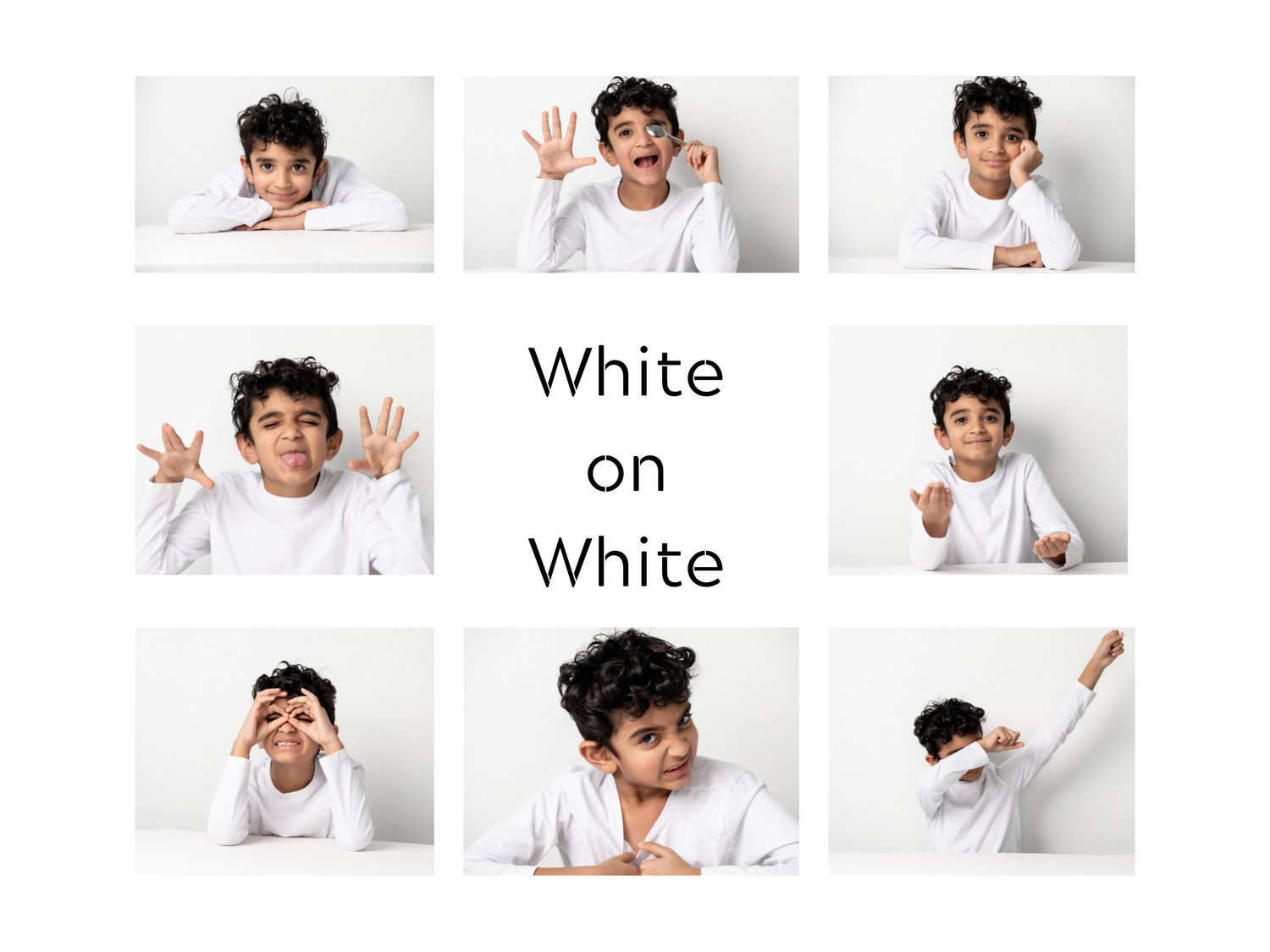
When everything else fades away, what remains is personality, innocence, and pure joy. This is the magic of white-on-white—where your child doesn’t just pose… they simply become themselves.
White-on-white photography is my way of coming back to the essence.
For me, motherhood and family are deeply sacred. In many cultures, a mother is seen as a divine presence—someone who nurtures, protects, and gives endlessly. But in everyday life, motherhood doesn’t always feel that way. It feels busy, chaotic, overwhelming. Beautiful, yes—but also exhausting.
Through high-key, minimalist maternity and family photography, I try to capture what motherhood truly is beneath all of that.
Not the chaos, but the purity behind it.
Not the noise, but the love within it.
When everything else is removed—colors, props, distractions—you begin to see emotions more clearly. A gentle touch. A quiet smile. The way a child leans into their mother without thinking. These small moments become the entire story.
And yet, I often hear doubts when I introduce this style to families in Waterloo, Kitchener, and Cambridge.
Some mothers wonder if it will feel too plain, too simple, maybe even dull. Others worry if they will look good in such bright images, or if their child will cooperate, or if they have the “right” clothes for it.
The truth is, this style is not about perfection. It’s about presence.
You don’t need elaborate outfits. You don’t need a perfectly behaved child. You don’t need to know how to pose. In fact, the less you try to perform, the more beautiful the images become. My role as a maternity and newborn photographer in Waterloo Region is not to pose you like a mannequin, but to gently guide you, to create a space where you feel calm, supported, and seen.
What most people don’t realize is that while these images look simple, they are incredibly intentional to create. Capturing true white is one of the most challenging aspects of photography. White absorbs even the slightest color tint. Light must be carefully balanced. Every detail matters.
I remember during my photography journey, one of the most challenging assignments I had was to photograph a white object against a white background. It sounds simple, but it required everything I had learned to get it right. That experience stayed with me, because it taught me something important—the simpler something looks, the more intention it carries.
Today, I carry that same intention into every studio maternity session, newborn photoshoot, and family portrait session at Golden Grains Photography.
Not to create just another photograph, but to create something that will hold its meaning over time.
Because when you look at these images years later, I don’t want you to notice the style first. I want you to feel something. I want you to feel the warmth of holding your child, the love in your family, the quiet pride of being present in your own story.
Almost like holding a warm cup of chocolate milk on a cold day—comforting, familiar, and deeply personal.
This style is still new for many families looking for family photography in Waterloo Region. It’s not something you may have seen often, and it’s not something people usually search for—because they don’t yet know they can.
But I believe the need is already there. It’s a quiet need. A hidden one. The need to feel seen. The need to feel present. The need to preserve something that doesn’t fade with time.
White-on-white photography is not just about how your photos look. It’s about how they make you feel—today, and many years from now, and sometimes, that is everything.